

Abu Dhabi is the second most expensive emirate to rent in, after Dubai — but it also pays more for many jobs. A studio flat rents at a typical advertised range of AED 28,000–50,000 a year and a one-bedroom at AED 35,000–65,000, checked November 2026. Add groceries, transport and utilities, and a single worker needs roughly AED 5,200 a month all-in on a tight budget, while a small family needs about AED 7,767. This guide works through each line, with the figures labelled so you can see what is a rent range and what is a typical range. For the UAE-wide comparison, see our cost of living in the UAE hub.
How much is rent in Abu Dhabi?
Abu Dhabi’s rental index sits at AED 99 per sq ft per year (Bayut Property Rental Index, September 2026) — second only to Dubai’s AED 115. The typical advertised ranges, checked November 2026, are:
| Home | Typical advertised rent (AED/year) | Monthly equivalent |
|---|---|---|
| Studio | 28,000–50,000 | 2,333–4,167 |
| 1-bedroom | 35,000–65,000 | 2,917–5,417 |
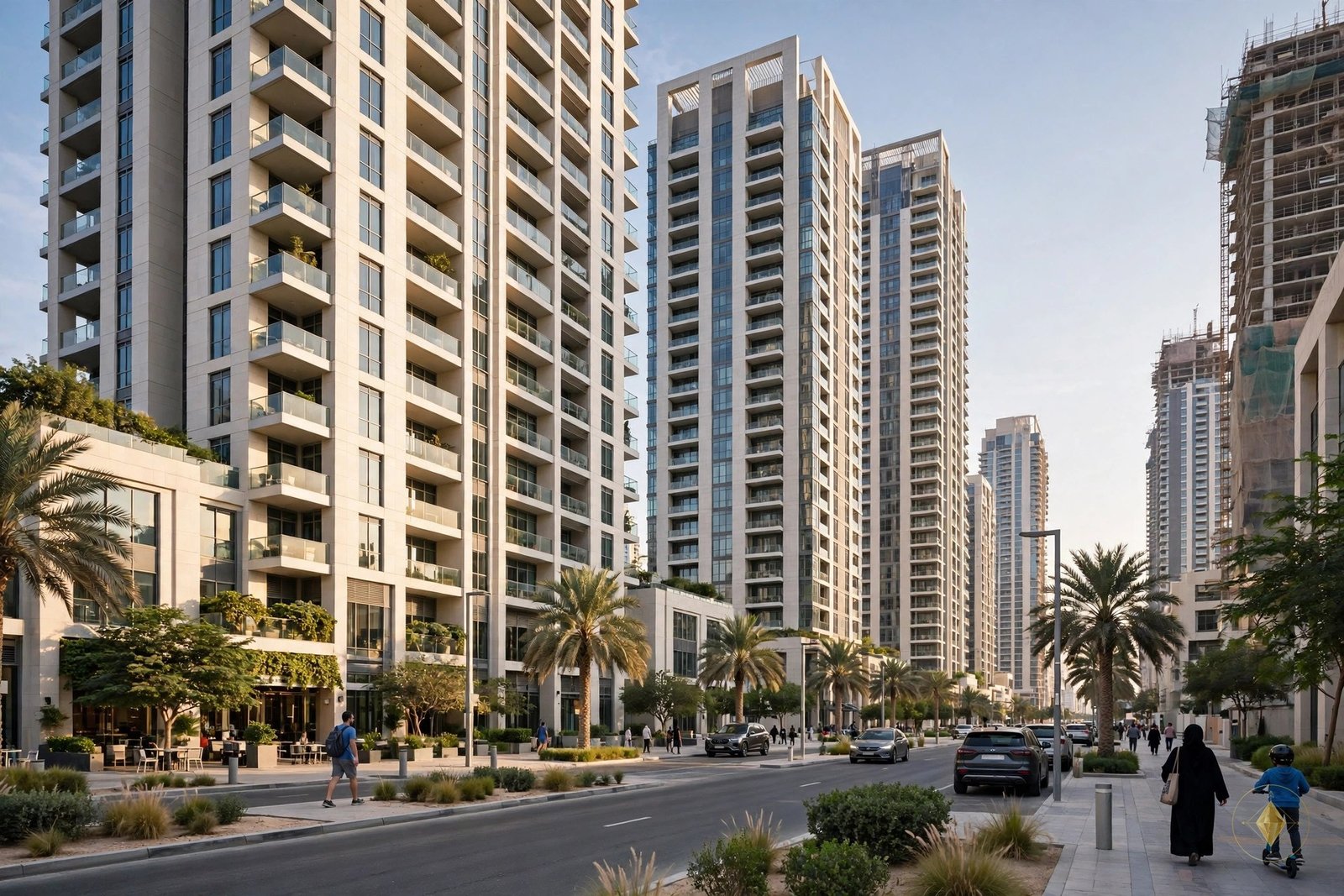
The range is wide because location matters so much: a studio on the Corniche or in a new tower costs far more than one in an older building further out. As with Dubai, the dearest flats cluster in prime areas and the cheaper ones sit in outer districts. Rent is usually paid in one to four cheques a year, so a studio at the mid-point of the range — AED 39,000 a year — means AED 3,250 a month in the budget below, but you will need the cheque amount up front. Before signing, ask who pays the cooling: in many newer towers district cooling is billed separately, and our utility bills guide shows a one-bedroom district cooling bill can run about AED 410–510 a month.
How much do groceries cost in Abu Dhabi?
Groceries in Abu Dhabi cost much the same as elsewhere in the UAE — the same chains stock the same staples at similar prices, and the ministry’s Essential Goods Prices Platform tracks them across 13 retailers. For a single worker, groceries sit in a typical range of AED 800–1,200 a month; for a small family, AED 1,800–2,500 a month. Those are typical ranges checked November 2026, not official statistics. Our groceries guide prices the basket item by item from the ministry platform — basmati rice at AED 4.38 a kilo and fresh milk at AED 3.75 a litre at the cheapest recorded listings — and the same staples cost much the same in Abu Dhabi. LuLu, Carrefour and the co-op stores compete on price here as they do in Dubai, and shopping the weekly leaflet is the single biggest saving most households can make.
How much does transport cost in Abu Dhabi?
Abu Dhabi has no metro, so buses and cars carry the load. Public bus fares are low, but coverage is thinner than Dubai’s metro network, and most workers who live outside the city centre drive. Transport sits in a typical range of AED 200–600 a month, checked November 2026, depending on whether you ride the bus or run a car and pay for fuel. A car adds fuel — Special 95 petrol is priced monthly by the UAE Fuel Price Committee — plus insurance, registration and parking, so the top of the range is the honest figure for a driver. The intercity bus to Dubai costs AED 25 (RTA), which matters if your job is in one emirate and your flat in another. If you are weighing Abu Dhabi against Dubai, read our transport guide and compare the AED 230 two-zone Nol pass against a car.
What do utilities and internet cost in Abu Dhabi?
Electricity and water in Abu Dhabi come from ADDC and AADC, now under TAQA Distribution. On identical usage — 1,000 kWh of electricity and 20 m³ of water in a month — Abu Dhabi priced lowest of the four provider areas in our utility bills guide, at AED 418 before VAT, against AED 466 in Dubai and Sharjah. But the tariff is only part of the bill: Abu Dhabi also charges a municipality fee of 5% of annual rent, collected through the bill, so on a flat rented at AED 39,000 a year that is about AED 163 a month. Utilities plus internet together sit in a typical range of AED 400–700 a month for a single worker and AED 700–1,200 for a family, checked November 2026. Home fibre starts at about AED 389 a month on both main networks, and 5G home wireless at about AED 229 is the cheaper route for many renters — see our internet and mobile guide.
What is a monthly budget for a single worker in Abu Dhabi?
This budget uses the mid-point of the studio rent range (AED 39,000 a year = AED 3,250 a month) and mid-points of the typical ranges for the other lines. It is a tight budget with no savings built in.
| Line | AED/month |
|---|---|
| Rent (studio, mid-point of AED 28,000–50,000/year) | 3,250 |
| Groceries (typical range AED 800–1,200) | 1,000 |
| Transport (typical range AED 200–600) | 400 |
| Utilities + internet (typical range AED 400–700) | 550 |
| Total | 5,200 |
On AED 5,200 a month, a single worker lives but does not save much. The middle of the monthly averages across our 117 profession guides is AED 4,307 — so a typical salary on its own does not cover this budget. Abu Dhabi pays more than other emirates for many finance, healthcare and sales roles, which is why the emirate still works for many workers. Check what your job pays on our professions page and our average salary in the UAE page before you sign a lease.
What is a monthly budget for a small family in Abu Dhabi?
This budget uses the mid-point of the one-bedroom rent range (AED 50,000 a year = AED 4,167 a month) and mid-points of the typical family ranges. It covers two adults and one child, with no school fees, no car loan and no savings.
| Line | AED/month |
|---|---|
| Rent (1-bedroom, mid-point of AED 35,000–65,000/year) | 4,167 |
| Groceries (typical range AED 1,800–2,500) | 2,150 |
| Transport (typical range AED 200–600) | 500 |
| Utilities + internet (typical range AED 700–1,200) | 950 |
| Total | 7,767 |
A family budget of AED 7,767 a month needs a solid salary or two incomes. School fees, a car, or a two-bedroom flat would push it higher still. If the offer on the table does not clear this total with room to save, the cheaper emirates are worth a look — our cost of living in Sharjah guide shows a family budget of about AED 5,892, and our cost of living in Ajman guide about AED 5,217, both with the same honest labelling.

Frequently asked questions
Is Abu Dhabi more expensive than Dubai? For rent, Dubai is dearer at the top end — its rental index is AED 115 per sq ft per year against Abu Dhabi’s AED 99 (Bayut, September 2026). For groceries and utilities the two are close, and Abu Dhabi priced lowest on identical utility usage at AED 418 before VAT.
How much do I need to earn to live in Abu Dhabi? A single worker needs roughly AED 5,200 a month on a tight budget, and a small family about AED 7,767, using mid-point rents and the typical ranges in this guide. Both figures leave little room to save.
How much is a studio flat in Abu Dhabi? A typical advertised range of AED 28,000–50,000 a year, checked November 2026 — AED 2,333–4,167 a month, with prime areas at the top of the range.
Does Abu Dhabi have a metro? No. Buses and cars carry the load, and the intercity bus to Dubai costs AED 25. Transport sits in a typical range of AED 200–600 a month depending on whether you ride the bus or drive.
What does the municipality fee add to the bill? Abu Dhabi charges a municipality fee of 5% of annual rent. On a flat rented at AED 39,000 a year, that is about AED 163 a month, collected through the utility bill.
Last updated: 24 November 2026. Rent figures are typical advertised ranges checked November 2026, cross-checked against the Bayut Property Rental Index, September 2026. Groceries, transport and utilities figures are typical ranges, labelled as such.
Sources: Bayut Property Rental Index, September 2026; buyorsell.ae rent ranges, September 2026; UAE Ministry of Economy & Tourism Essential Goods Prices Platform; ADDC / TAQA Distribution published tariffs; RTA intercity bus fare; e& and du home internet prices, checked 29 October 2026.
Find jobs that pay enough for this budget: browse the professions page or check the average salary in the UAE.