
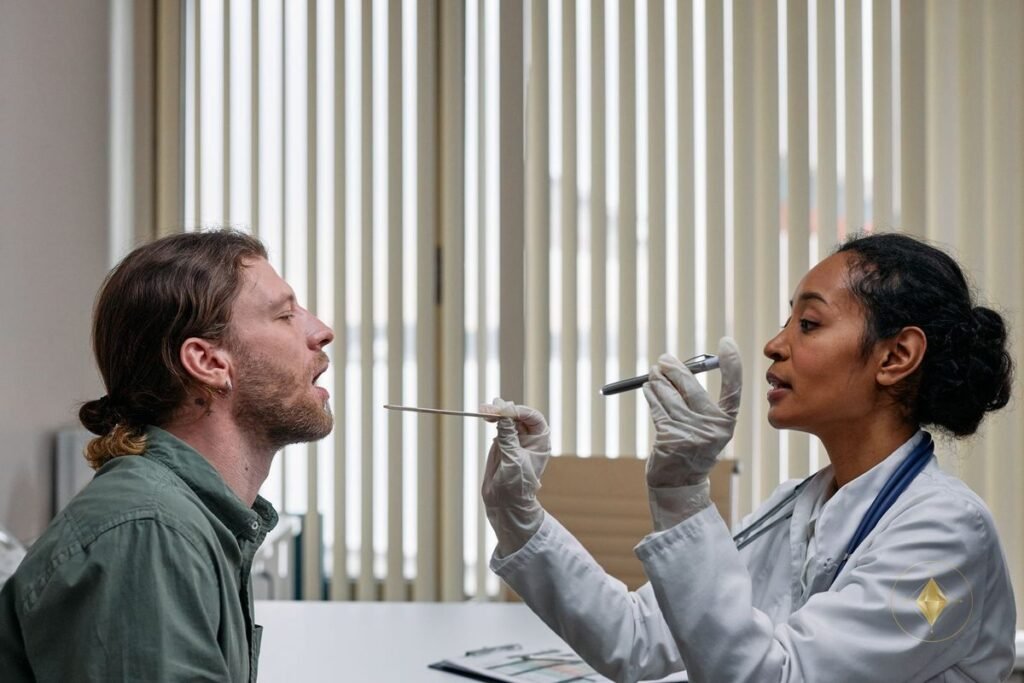
The medical test is the last gate in a UAE work visa. Your job offer is signed, your work permit is approved, your entry permit has brought you into the country — and still no residence visa is issued until this test is cleared. That order catches many first-time workers by surprise, and it is the reason this guide exists: to set out what the test is, who has to take it, when and where it happens, exactly what it screens for, and what a positive result means for each item on the list. Everything here follows the UAE Government’s own published rules, and the full process around the test is set out in our main guide to the UAE work visa.
What is the medical fitness test?
The medical fitness test is a fixed screening for communicable diseases. That is all it is. It is not a general health check, and it does not test your overall fitness for the job. Nobody measures whether you are strong enough for the work, or fit enough for the hours. The test asks one question only: do you carry one of the communicable diseases on the official list?
The list is set by Cabinet Resolution No. 5 of 2016, which amended the medical examination rules for expatriates coming to the UAE for work or residence. The same resolution fixes what happens after each result, so the test is not a matter of a doctor’s opinion on the day. The diseases are named in the resolution, the outcomes are named in the resolution, and the centre applies them as written.
Knowing what the test is — and what it is not — takes away most of the worry around it. If you are healthy and carry none of the listed diseases, there is nothing in the test designed to catch you out. It does not look at old injuries, eyesight, blood pressure, or any condition outside the list. Workers who arrive expecting a full medical often fear the wrong thing. The test is narrow on purpose: it exists to protect public health, not to judge whether you can do the job. Your employer has already decided that, when the job offer was made.
Who has to take the medical test?
Every residence applicant aged 18 or above must take it. That is the rule, and it covers work visa applicants as well as other residence applicants. There is no exemption for a first job, a short contract, or a worker who has already had a medical at home. A medical done in your home country does not count. The test that matters is the one taken inside the UAE, at a government medical fitness centre, as part of your residence file.
The test also applies at renewal, not only the first time. HIV/AIDS testing is mandatory for every applicant, whether the residence is new or being renewed. Leprosy testing is carried out for new applicants and again at renewal. So the medical is not a one-time hurdle you clear on arrival and forget about. Each time your residence comes up for renewal, the screening comes up with it, and a residence visa cannot be renewed without it.
One group to note is domestic workers — maids, nannies, drivers and similar household roles. The pregnancy test on the official list applies only to them. It is not part of the screening for other workers. If you are taking up a company job, a factory job, a shop job, or an office job, that test does not apply to you.
When and where does the medical test happen?
The medical happens inside the UAE, after you arrive and before your residence visa is issued. The order is fixed: job offer, work permit approval, entry permit, travel, and then the medical test and Emirates ID, and only then the residence visa. You cannot take the test before you travel, and no result from outside the UAE is accepted in its place.
Your employer directs you to complete it. In practice that means the employer tells you which government medical fitness centre to attend and when to go. The test is taken at a government medical fitness centre — not at a private clinic of your own choice, and not through an agent. Your part is simple: turn up when directed, with your passport and the papers your employer gives you, and take the tests on the list.
Timing matters, because the medical sits inside a fixed window. The government portal advises completing the residency procedures within one month of entering the UAE, and the entry permit itself is valid for two months. The medical fitness test, the Emirates ID application, the labour card and the residence visa itself all have to be completed inside that period, with you inside the country. A worker who enters late in the entry permit’s two months squeezes the medical, the ID and the residence steps into whatever days remain. Go for the medical as soon as your employer directs you to it. Leaving it to the last week of the entry permit is how a straightforward file turns into a rushed one.
Your residence visa cannot be issued until the medical is cleared. That is the point to hold on to through this whole guide. The medical is not a formality at the end of the process — it is the step the residence visa waits for.
What happens during the security check?
Residence applicants pass a security check alongside the medical test. The two go together as part of the residence file: the medical fitness result and the security check sit next to the Emirates ID application and the employment contract, and the residence visa is issued on the basis of the whole file.
There is nothing extra for you to arrange for the security check. It runs as part of the same residence process your employer is handling, in the same stage as the medical and the ID. The practical point is the same as for the medical: the residence visa waits until this stage is complete, so delays here delay the visa. If your employer asks you for a document or a detail for the file, hand it over promptly and keep a copy for yourself.
Which diseases does the medical test screen for?
The test list comes from Cabinet Resolution No. 5 of 2016. Six items are on it:
- HIV/AIDS — mandatory for every applicant, whether the residence is new or being renewed.
- Leprosy — carried out for new applicants and again at renewal.
- Tuberculosis (TB) — tested under its own rules, which are different from the other items on the list and are set out in the next section.
- Hepatitis B — part of the screening list set out in the resolution.
- Syphilis — also on the official list of tests.
- Pregnancy — only for domestic workers: maids, nannies, drivers and similar household roles.
That is the full list. If someone tells you the medical checks for something else — a drug test, a general blood panel, a check on an old injury — that is not the test the resolution describes. The list is fixed, it is published, and it is the same for every applicant. Knowing the list before you travel means no surprise at the centre, and it also means you can spot a fake: anyone who describes a different set of tests, or who offers to “arrange” your medical from outside the UAE for a fee, is describing a process that does not exist.

What happens if a test comes back positive?
The result that matters is the one the centre records: “fit” or not fit. A “fit” result lets the residence file move on to the visa. A positive result on one of the listed diseases is handled under the rules in Cabinet Resolution No. 5 of 2016, and the rules are different for different diseases.
HIV/AIDS. If the result is positive, residency is denied, or not renewed. That applies to a new application and to a renewal alike. There is no middle outcome for this item on the list.
Leprosy. A positive result also means residency is denied, or not renewed — again for new applications and renewals alike.
Tuberculosis (TB). TB is handled differently from the two items above, and the difference matters. People found with drug-resistant TB are treated inside the UAE until they recover, and residency may then be renewed. The rules also allow exceptions for old or active TB cases in first-time residency applications. So a TB finding does not follow the same automatic refusal as a positive HIV/AIDS or leprosy result. Treatment inside the UAE, recovery, and then renewal is the path the rules set out for drug-resistant TB, and first-time applicants with old or active TB may fall under the exceptions the rules allow.
Hepatitis B and syphilis. Both sit on the official screening list, and the centre’s result on them goes into the same fitness decision as the rest of the list. A “fit” result is what the residence file needs, and it is the centre — applying the resolution — that records it.
Pregnancy. The pregnancy test applies only to domestic workers, as set out above. It is not part of the screening for other work visa applicants.
The hard truth to plan around is that a problem at this stage stops the whole process at the final step, after you have already travelled. Your offer is signed, your permit is approved, you have flown in — and the residence visa still waits on this result. That is why the official sequence matters, and why it is worth knowing the list and the outcomes before you leave home rather than learning them at the centre.
Why does the medical test come at the end of the process?
The medical comes last because the residence visa is the last document in the chain, and the medical is one of the documents the visa is built on. The chain runs in order: the job offer is signed, MOHRE approves the work permit, the entry permit brings you into the country, and then the medical test, the Emirates ID application and the employment contract are completed inside the UAE. Only with the medical result, the ID application and the contract in place is the residence visa issued. A residence visa cannot be processed while you are outside the UAE, so there is no version of this process in which the medical happens first, from home.
This order is also your protection against fraud. A genuine process never asks you to pay for a medical before you travel, and never offers to “clear” your medical from outside the country. The test is taken in person, inside the UAE, at a government medical fitness centre, after arrival. Anyone who promises to arrange your medical or your visa from outside the UAE, for a fee, is describing a process that does not exist. The same warning applies to the visa itself: the employer is responsible for paying recruitment expenses under the Labour Law, so if an agent or a so-called employer asks you to pay for your visa, your permit or your medical, that is not how the system works.
There is a second reason the timing matters. The entry permit that brings you in is valid for two months, and the government portal advises completing the residency procedures within one month of entering. The medical, the Emirates ID fingerprinting, the labour card and the residence visa all have to fit inside that window. The medical is not a step you can postpone and pick up later — it is the step everything else waits for.
What should you do before you travel?
There is nothing to study for and nothing to buy. What you can do is arrive ready, with the papers and the knowledge that keep the file moving.
First, check your passport. It must be valid for a minimum of six months. A passport close to expiry can stall the whole file, and the medical stage is where a short passport causes trouble, because the residence file is being put together around it. Check the expiry date before you sign anything.
Second, keep your own copies. Keep a copy of the signed MOHRE job offer — the contract registered after you arrive must be based on this offer — and keep copies of your passport, your photograph and your certificates. The contract must be submitted to MOHRE within 14 days of your arrival, so the papers need to be to hand, not sitting in a bag you cannot find.
Third, know the pattern of the genuine process before you travel. A genuine offer comes as an offer letter issued through MOHRE, signed by the company’s authorised manager, and you can check its reference number in the enquiry service on MOHRE’s website. Your passport stays with you — UAE Government guidance lists keeping possession of your own passport as one of your basic rights as a worker. And the medical happens after arrival, at a government medical fitness centre, directed by your employer. If anything you are told before travel contradicts that pattern, stop and check it against the official sources before you pay anyone or board a plane.
Fourth, plan for the wait after arrival. You enter the UAE on the entry permit and stay in the country until the process is finished. The medical and the Emirates ID fingerprinting need you there in person, so do not plan a trip home between arrival and the residence visa. Once the medical is cleared, the ID application is in, and the contract is registered, the residence visa follows — for standard employment, valid for two years.
The medical test is a short step in a long process, but it is the step the residence visa waits for. Know the list, know when it happens, and know that it happens inside the UAE after you arrive. With that clear, there is nothing in the test to fear and nothing in it that should hold up a genuine application. For the full picture — the job offer, the work permit, the entry permit, and every step from offer to residence visa — read our main guide to the UAE work visa.