
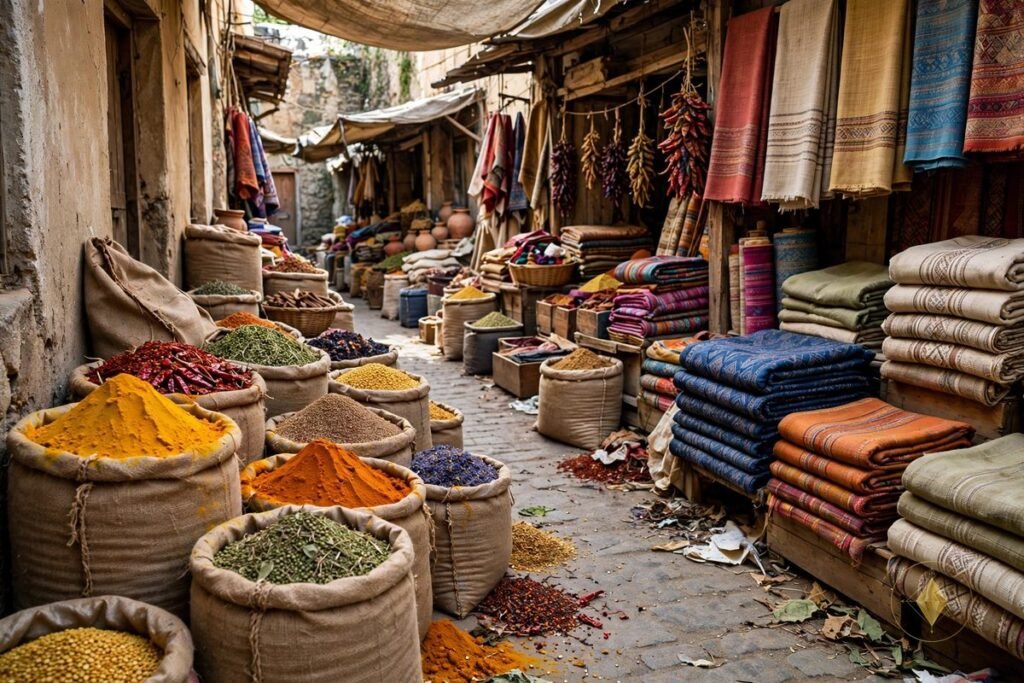
Souk or Mall: Where Is Shopping Cheaper in the UAE?
For gold, the question answers itself once you see how the price is built. The metal costs the same everywhere — on the official daily rate for 7 November 2026, 24-karat gold was AED 490.50 per gram and 22-karat AED 454.25, in a souk, in a mall, in every emirate — so the contest is decided by the making charge on top: about 4–12% in the souks against 15–25% at mall jewellers in the guides retrieved for this page. The same pattern repeats wherever a price can move: spices, oud and loose dates carry wide, bargainable souk ranges, while mall prices are printed and fixed. The mall wins on branded goods, warranties and certainty. And in both places, a tourist takes most of the 5% VAT back at the airport — 87% of it, less AED 3.60 per transaction, on purchases of AED 250 and above, on the tax authority’s own terms. Figures come from sources fetched on 7 November 2026; where no like-for-like price exists in published form, this page says so instead of inventing one. Travelling as a family and splitting the budget between sights and shopping? Our family trip costs guide prices the other half.
Last updated: 7 November 2026 · Sources: the Federal Tax Authority, the trade group’s daily gold rate, shopping and bargaining guides — full list at the end of this page
Is gold cheaper in a souk or a mall?
The gold itself is not cheaper anywhere. Its price is a published daily rate, set by the trade group from the world spot price and used by licensed shops across the country. On the morning this page’s sources were fetched, the suggested retail rates stood at AED 490.50 per gram for 24-karat, AED 454.25 for 22-karat, AED 435.50 for 21-karat and AED 373.25 for 18-karat. Two live spot trackers printed slightly lower figures the same morning — AED 490.40 and AED 480.66 for 24-karat — because the world price moves through the day; the trade group’s rate is the one on the board in the shop. A traveller who spends the morning hunting for a cheaper per-gram rate is hunting for something that does not exist.
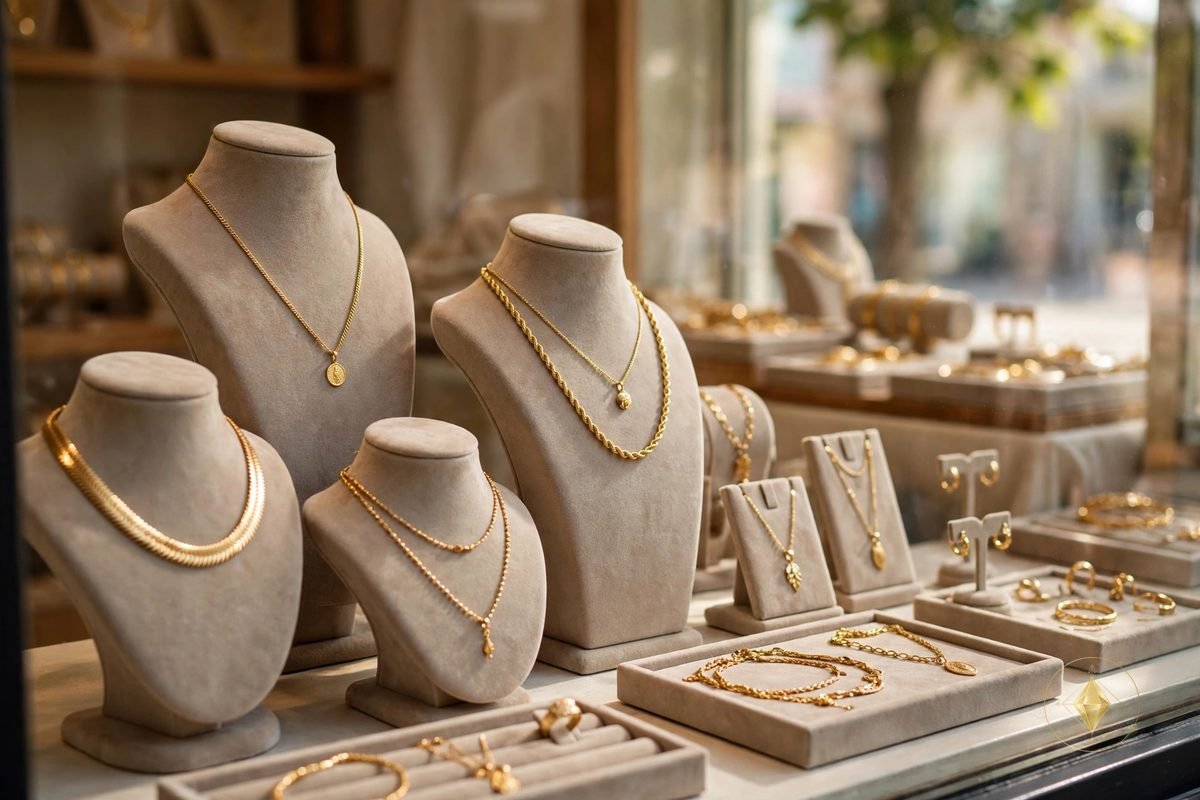
What exists is the making charge — the fee for turning metal into jewellery — and there the settings split cleanly. A souk-versus-mall comparison retrieved for this page puts souk making charges at 4–12% of the gold value, negotiable down toward 5–8% with bargaining, and mall jewellers at 15–25%, fixed under corporate pricing with bargaining rarely possible. A second guide puts branded mall chains lower, at 12–15% or more, and plain souk work at 5–8%; the bands disagree, the direction never does. A design-based ladder on the rate page itself prints about 3–8% for machine-made pieces, 8–15% for standard work and 15–35% for intricate handmade pieces, wherever they are sold. Run the arithmetic on a 10-gram 22-karat piece: the metal is AED 4,542.50, a souk charge at 5–8% adds AED 227–363, and a mall charge at 15–25% adds AED 681–1,136. The gap on identical metal is roughly AED 320–910, before tax. One bargaining guide adds that branded chains cut making charges by 25–50% in festival promotions, which is the mall’s one real counter-move. Add 5% VAT on a jewellery invoice — investment-grade bars and coins at 99% purity and above are zero-rated instead — and keep the receipt: it records the weight and karat that the whole calculation stands on. Shoppers arriving on a short break can pair this with our stopover costs guide to time the trip.
Are spices and saffron cheaper in a market?
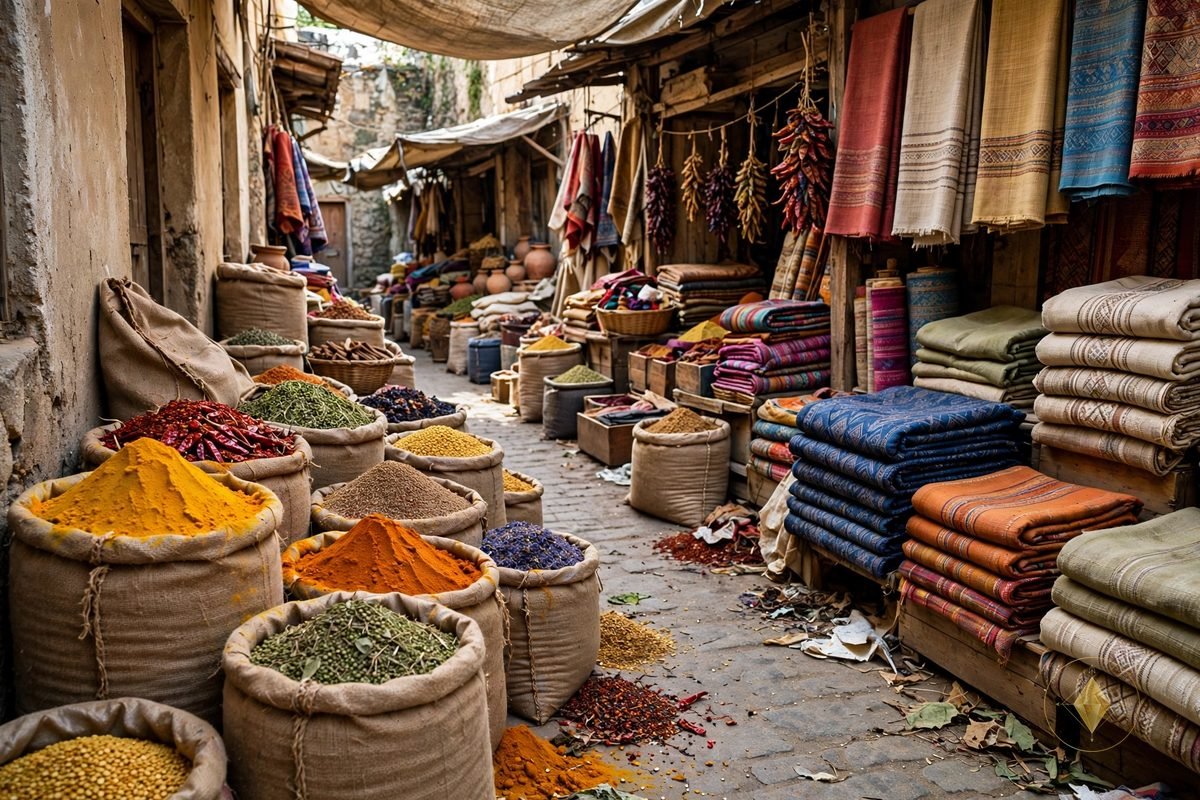
In a souk, spices are loose, sold by weight, and priced to be argued over; in a supermarket, the same spice arrives packaged and fixed. Saffron, the headline spice, is printed at AED 8–15 a gram by one shopping guide, AED 10–50 or more by another, AED 20–30 for the Iranian grade by a detailed guide, AED 20–40 by a fourth and AED 30–50 by a fifth. Grade explains part of that spread, but no source supports a single souk price, so this page prints the range of ranges: price your exact grade in two or three stalls. Cardamom offers a firmer anchor: AED 40–60 for 100 grams in one souk guide, single-source and labelled as such. Everyday spices start from about AED 10 for small quantities.
What cannot be printed is a matched supermarket price per gram for the same loose spice, because no retrieved source publishes one. The fair comparison is structural: loose and negotiable against packaged and fixed. Dates follow the same shape: loose premium dates at AED 30–80 per kilo at the spice market in the one detailed guide that prices them, against gift boxes from AED 80 at a premium date brand — a kilo to eat against a box to give. The mall premium buys the box and the brand; the souk price buys the dates.
Where should you buy oud and perfumes?
With oud, the gold rule inverts: there is no published daily rate and no two bottles that are quite the same product. In the perfume market, loose oud oil, attars and bakhoor are blended, tested on your skin and priced by negotiation. Bakhoor starts at about AED 20 for a small pack, with boxes at AED 30–150 in a detailed guide and AED 50–500 in another. Blended attars start at AED 80–150, a custom blend at AED 50–200, and pure oud oil runs from AED 200 to well past AED 2,000 for three millilitres in one guide, and AED 500–5,000 and above in another. Pure oud varies by wood, origin and age more than almost any other product here.
Mall perfume houses sell the opposite proposition: branded bottles, sealed, identical in every store, at fixed prices. No like-for-like price exists across the two settings for the same oil, because the mall does not sell the souk’s product and the souk does not sell the mall’s. A buyer who wants a scent blended in front of them belongs in the market; a buyer who wants the brand and the certainty that the bottle matches the tester belongs in the mall — and pays for the certainty. Either way, test on skin and wait: oud changes over the first hour, at every price.
Are textiles, pashminas and souvenirs cheaper in a market?
Probably, on the structure of the prices — but this page prints no matched figure, because none was retrieved. No source fetched publishes a like-for-like pair: the same pashmina or souvenir priced in a souk and in a mall. Guides describe textile-market prices as lower and negotiable and mall prices as fixed, and that is as far as the evidence goes. Printing a percentage saving would mean inventing it.
What the sources do price is the shape of a souk negotiation. One guide’s bargaining table prints a decorative trinket asked at AED 150 settling at AED 50–70 — a first price carrying a cushion of more than half. Read it as a guide to the opening ask, not a price list. In a mall, the ticket is the price. The real textile risk sits elsewhere — fibre content: a pashmina priced like cashmere and woven like polyester is dear at any discount. Buy cloth you can test by touch, from a stall you could return to. Small-bill etiquette for a market day sits in our tipping guide.
What about electronics and branded goods?
Here the mall’s case is strongest, and again the comparison is structural: no matched price for the same phone or camera, souk against mall, was verified from a retailer page for this guide. Market electronics stalls negotiate and can start lower; mall chains hold fixed prices. What the fixed price buys is a manufacturer warranty honoured at home, a return window, and — for the refund below — paperwork from a registered retailer that the airport scheme accepts without argument.
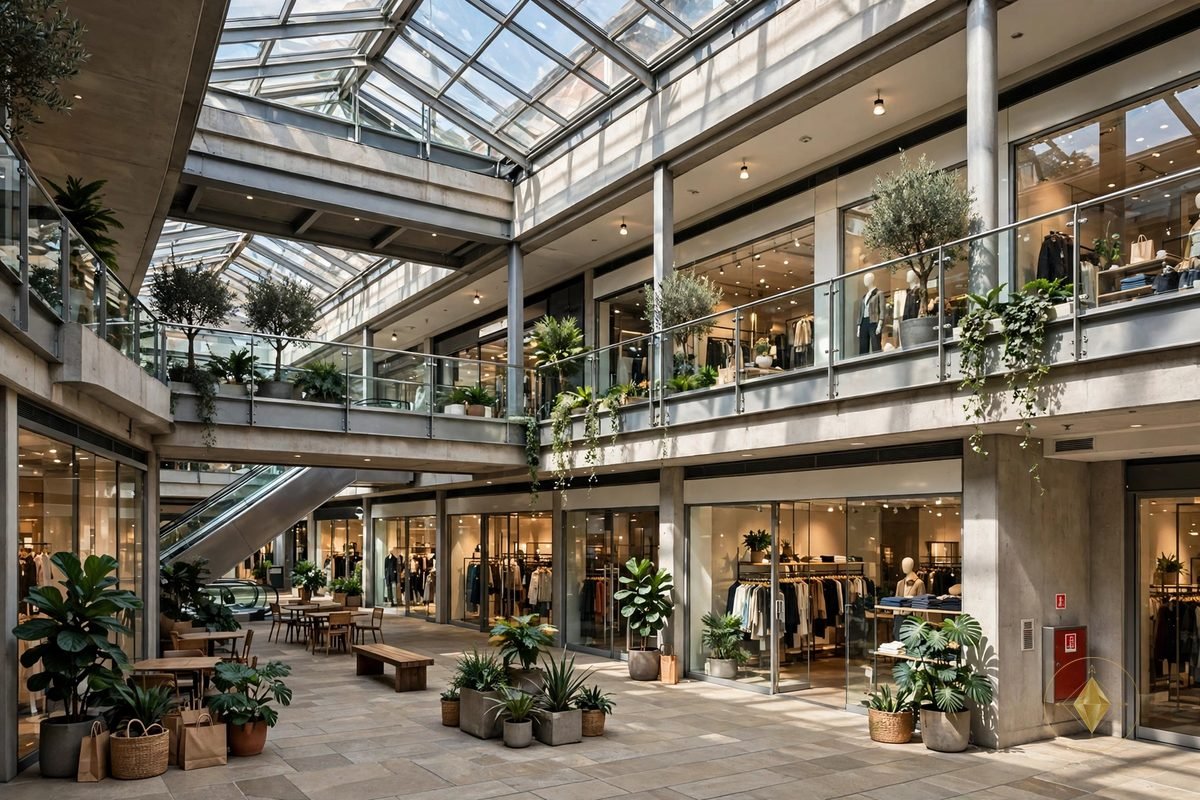
The same logic covers branded fashion and watches: a mall boutique sells the brand’s own price with its guarantee; market shops sell unbranded and parallel-imported goods at negotiable prices — a different product wearing a similar face. Where the item is the brand, the mall is the only option selling the thing itself. Keep invoices for the refund validation, and consider cover for big purchases, priced in our travel insurance costs guide.
How much can you haggle, and where?
Published guidance agrees on the map and disagrees on the number. The map: haggling is expected in the souks and the independent markets, where a first price is an opening position, and it is not part of mall shopping, where prices are set by the chain. Gold sits between the two — expected in a souk, pointless on the metal rate anywhere, and aimed entirely at the making charge. A major tour operator’s souk guide advises countering at 50% off the quoted figure, politely, shopping around first, and being ready to walk away, noting that cash can bring bigger discounts and that some gold shops waive making charges for cash. Two other guides advise a first counter at 30–40% below the quoted price, meeting in the middle; two more print the 50% start. The published span for a counter-offer on non-gold goods is therefore 30–50% below the first price, printed here as a disagreement between guides rather than a rule — there is no official norm, and the tax authority that runs the refund scheme publishes nothing on bargaining.
Technique matters more than the opening number. Compare the same item in three stalls before offering anywhere; the second and third quotes teach you the market’s real floor. Bundle purchases in one stall, where a seller can trade margin across items. Keep the exchange friendly — the guides agree that pressure ends negotiations, while a polite walk toward the door often restarts them at a better figure. Settle the weight, grade or fibre before the price: a discount on the wrong specification is not a saving. For price checks between stalls, staying connected is priced in our tourist SIM and internet costs guide.
How does the tourist VAT refund change the comparison?
It narrows it, fairly, in both settings — because the scheme follows the retailer, not the roof. On the tax authority’s own service page, opened in full for this guide: the refund scheme is run with its appointed operator; you must have entered on a tourist visa, be 18 or over and not a resident; the minimum eligible spend is AED 250 per transaction, excluding VAT; and the deduction is 13% of the VAT amount plus AED 3.60 per tax-free transaction. In plain terms, you receive 87% of the VAT, less the per-transaction fee. Transactions must be validated within 90 days of the invoice, you must depart within six hours of validating, refund requests run up to one year from validation, cash refunds are capped at AED 35,000 with no limit by card, and card refunds land within nine calendar days on the service page’s timings. Older pages and guides still print 85% of the VAT less AED 4.80 per tag — superseded terms, replaced in July 2026 — and the authority’s own October 2026 launch of a faster digital platform, live at the three largest airports, points card refunds toward one business day; the service page’s nine days is the figure to plan on until the pages agree.
Do the arithmetic once and the scheme’s shape is clear. On AED 1,000 of VAT-bearing goods, the VAT inside the till price is about AED 50 on a standard reading; 87% of that is AED 43.50, less AED 3.60, so AED 39.90 comes back — roughly 4% of what you paid, not the headline 5%. Two consequences follow. First, group purchases onto fewer receipts where a shop allows it: the AED 3.60 is charged per transaction, so five small tags lose five fees. Second, the refund does not rescue a bad price: 4% back on a mall making charge of 25% still leaves the souk’s 8% far ahead, which is why the refund belongs at the end of the comparison, not the start. It applies in a registered souk shop exactly as in a mall chain — ask before you buy, because only registered retailers can issue the tax-free transaction. More trip budgets sit in the Travel category archive.
FAQs
Is the gold rate different between a souk and a mall?
No. The per-gram rate is published daily by the trade group and used across the country — AED 490.50 for 24-karat and AED 454.25 for 22-karat on 7 November 2026. Only the making charge differs: about 4–12% in souks, 15–25% at mall jewellers, on the guides retrieved.
Can you haggle in a mall?
Not in the chain stores and brand boutiques, where prices are fixed. Haggling is the souk system: published guides advise a first counter 30–50% below the asking price on non-gold goods, and negotiation aimed at the making charge on gold.
How much VAT do tourists actually get back?
87% of the 5% VAT, less AED 3.60 per tax-free transaction, on purchases of AED 250 and above from registered retailers — about AED 39.90 back on AED 1,000 of goods. Older guides printing 85% less AED 4.80 are out of date.
Is saffron cheaper in the spice market?
The souk ranges retrieved span AED 8–50 a gram depending on grade and guide, sold loose and negotiable. No matched packaged price from a store was retrieved, so compare your grade across two or three stalls rather than trusting any single printed figure.
Are electronics cheaper in the markets?
No matched price for the same model was verified for this page. Market stalls negotiate from lower opening prices; mall chains hold fixed prices that carry the manufacturer warranty and clean refund paperwork. Judge the full package, not the opening figure.
Does the VAT refund apply to souk purchases too?
Yes, if the shop is registered with the scheme’s operator — registration, not location, is what counts. Ask before you buy, keep the tax-free transaction, and validate it at departure within 90 days of the invoice.
Data sources used on this page:
- Gold Souq rate page, reproducing the trade group’s suggested retail rates (updated 7 November 2026) — 24K AED 490.50 per gram; 22K AED 454.25; 21K AED 435.50; 18K AED 373.25; rate standardised across the UAE; making charges about 3–8% machine-made, 8–15% standard, 15–35% intricate — https://goldsouk.ae/gold-rate-in-dubai — retrieved 7 November 2026
- Federal Tax Authority (official), VAT Refund for Tourists service page — scheme run with Planet; entered on a tourist visa, 18+, non-resident; minimum spend AED 250 excluding VAT; deduction 13% of VAT plus AED 3.60 per transaction; validate within 90 days, depart within 6 hours; cash refunds capped at AED 35,000 — https://tax.gov.ae/en/services/tourist.vat.refunds.aspx?utm_source=chatgpt.com — retrieved 7 November 2026
- StalkDubai souk-versus-mall comparison — souk making charges 4–12%, negotiable; mall jewellers 15–25%, fixed — https://stalkdubai.com/gold-souk-or-malls-in-dubai-where-to-buy-gold/ — retrieved 7 November 2026
- MarketsHost gold guide — souk plain-design making charges 5–8%; branded mall chains 12–15% or more — https://www.marketshost.com/gold-price/ae/ — retrieved 7 November 2026
- Daily gold-rate reporting, 7 November 2026 — 24K at AED 490.50 per gram on the trade group’s rates, up from AED 487.50 the previous day — https://www.travelsdubai.com/07-Nov-2026/dubai-gold-rates-recover-24k-rising-dh490-50-per-gram — retrieved 7 November 2026
- DubaiEverything shopping guide — Iranian saffron AED 20–30 per gram; pure oud oil AED 200–2,000+ for 3 ml; bakhoor AED 30–150 per box — https://dubaieverything.com/where-to-go-shopping-in-dubai/ — retrieved 7 November 2026
- HolidayTribe things-to-buy guide — loose premium dates AED 30–80 per kg at the spice market; gift boxes from AED 80; saffron AED 20–40 per gram — https://holidaytribe.ai/blog/things-to-buy-in-dubai — retrieved 7 November 2026
- Viator / Union Plus souk tips — bargaining expected in souks; counter at 50% off the quoted figure; negotiate the gold making charge; cash can bring bigger discounts — https://travelexperiences.unionplus.org/en-IN/blog/Tips-for-Shopping-at-Souks-in-Dubai/l11927 — retrieved 7 November 2026
- Memphis Tours souk guide — cardamom AED 40–60 per 100 g; vendors open 30–40% above the expected price; counter 30–40% below and meet in the middle — https://www.memphistours.com/blog/souks-in-dubai-shopping-guide — retrieved 7 November 2026
- SIRAE gold-buying guide — investment-grade gold at 99% purity and above is zero-rated for VAT; jewellery carries 5% VAT on the invoice — https://www.siraecasa.com/blogs/news/buying-gold-in-dubai-guide-storage — retrieved 7 November 2026
- No like-for-like mall price was retrieved for loose spices, loose dates, unbranded textiles or pashminas, loose oud oil, or the same electronics model in both settings — those comparisons are made on price structure, warranty and paperwork only, and no matched saving is printed. No jeweller publishes its own making-charge tariff; the bands above come from the named shopping guides.