
Travelling Between UAE Cities: Cheapest Ways to Get Around (2026)
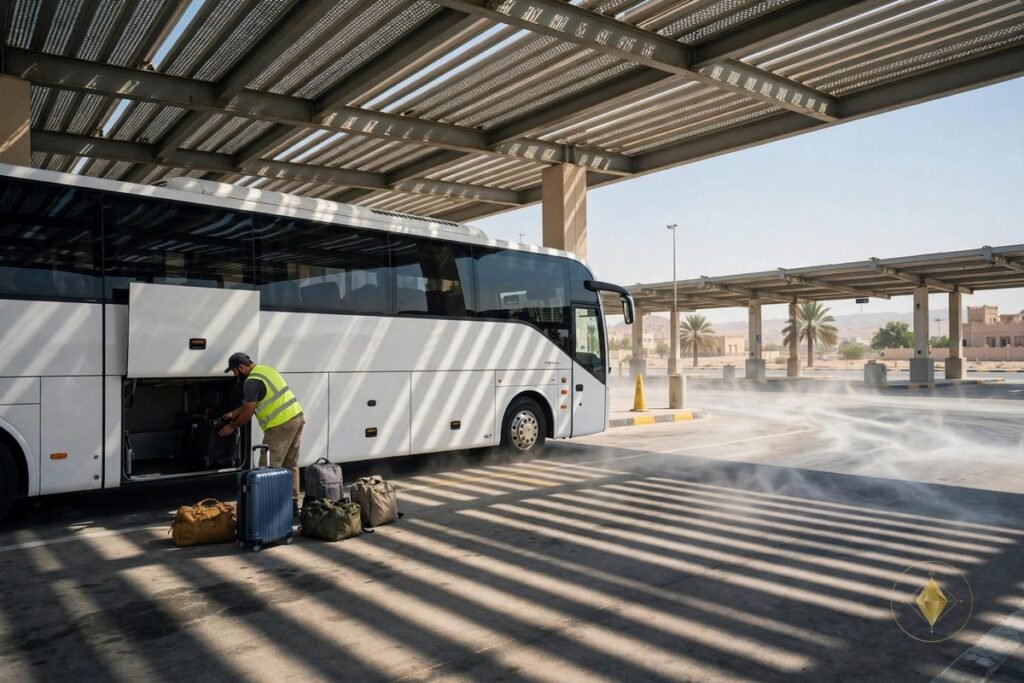
The cheapest way to travel between UAE cities is the intercity bus: fares run from AED 10–12 for the shortest hop, AED 25 for the flagship route between the two largest cities, and AED 30–35 for the longest runs — all retrieved from published transport-authority fares on 1 November 2026. The same flagship journey costs from AED 39 on the passenger train that launched in September 2026, about AED 72–85 to drive in fuel and tolls, and AED 250–400 in a metered taxi. This page prices every mainstream option route by route, names the cards you need before you board, and states plainly where no cheap option exists yet.
Last updated: 1 November 2026 · Sources: RTA and Abu Dhabi Mobility / ITC published fares, Etihad Rail launch coverage, Salik and Darb tariff reports — full list at the end of this page
What is the cheapest way to travel between cities?
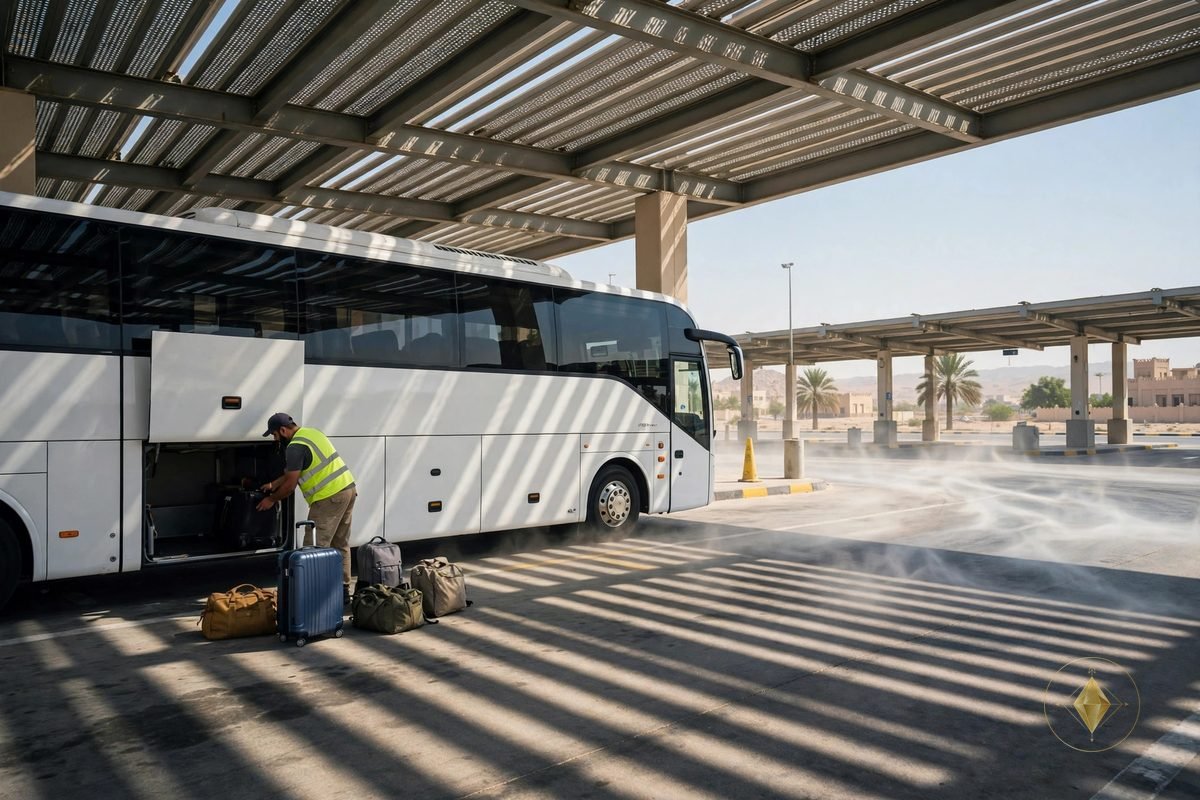
The bus, on every route where a bus runs — usually by a factor of ten against a taxi. The table below is the whole argument of this page in one place; the sections after it price each row from its source.
| Way of travelling | What it costs | What to know first |
|---|---|---|
| Intercity bus | AED 10–35 one way, by route | Cheapest everywhere; pay by transport card, not cash |
| Passenger train (Etihad Rail) | From AED 19–55 by route | Running since 2026 on three corridors; fastest option where it runs |
| Driving your own or a rented car | Fuel + tolls: about AED 72–85 on the flagship run; rental from AED 50/day | Best for groups and multi-stop days |
| Shared car lift (per seat) | AED 35–50 on the flagship corridor | Commercial services, not public transport |
| Metered taxi | AED 250–400 on the flagship run | Door to door; the meter decides, traffic included |
| Domestic flight | — | Does not exist: no scheduled flights are sold between emirates |
How much do the intercity buses cost, route by route?
| Route | Bus fare (AED) | Services | Time |
|---|---|---|---|
| Largest city → Sharjah | 10–12 | E306, E307, E307A | ~45–75 min, traffic decides |
| Largest city → Ajman | 12–15 | E411 (AED 12), E400 (AED 15) | ~45–60 min |
| Largest city → Capital | 25–30 | E101, E100, E102 (airport) | ~1 hr 40 min – 2 hr 15 min |
| Capital → Sharjah | 30 | Routes 117, 118 | ~2 hrs |
| Capital → Ajman | 35 | ITC intercity | ~2.5 hrs |
| Capital → Al Ain | 30 (premium 40) | ITC intercity | ~2 hrs |
| Capital → Al Dhafra (Liwa / Ruwais) | 30–37 | ITC intercity | 2–3.5 hrs by stop |
| Largest city → Ras Al Khaimah | 27 | RAKTA bus | ~1.5 hrs |
| Largest city → Fujairah | 30 (listing figure) | E700 | ~1.5–2 hrs |
The fares above are the transport authorities’ published prices as retrieved on 1 November 2026: Abu Dhabi Mobility lists the capital run at a flat AED 25 and the capital–Sharjah run at AED 30; the ITC fare list prices the capital–Al Ain bus at AED 30 (AED 40 for the premium service), capital–Ajman at AED 35 and the Al Dhafra runs at AED 30–37 by destination. Two honest wrinkles. First, the flagship route: a fare comparison that queried the RTA journey planner on 19 October 2026 was quoted AED 25 for the E101 but AED 30 for the E100 — so the table shows AED 25–30 for the pair, and it is worth checking the planner for the exact bus you will board. Second, the Fujairah bus fare rests on a fare listing rather than an authority page retrieved for this article; it is labelled as such, and the train below prices the same corridor from an official launch fare.
Payment is the part that catches visitors out. RTA intercity buses are Nol card only — cash is not accepted. A Nol Silver card costs AED 25 including AED 19 of credit; buy and top it up before you reach the station, because the AED 19 of included credit does not cover a AED 25 intercity fare on its own. Abu Dhabi’s services run on the separate Hafilat card: the same journey can ask for a different card at each end, so carry both if your trip crosses systems. Within the capital, city buses charge a AED 2 base plus a small distance charge, capped at AED 5 even on long local trips — the cheapest city network in the country.
What changed in 2026 — can you finally take a train?
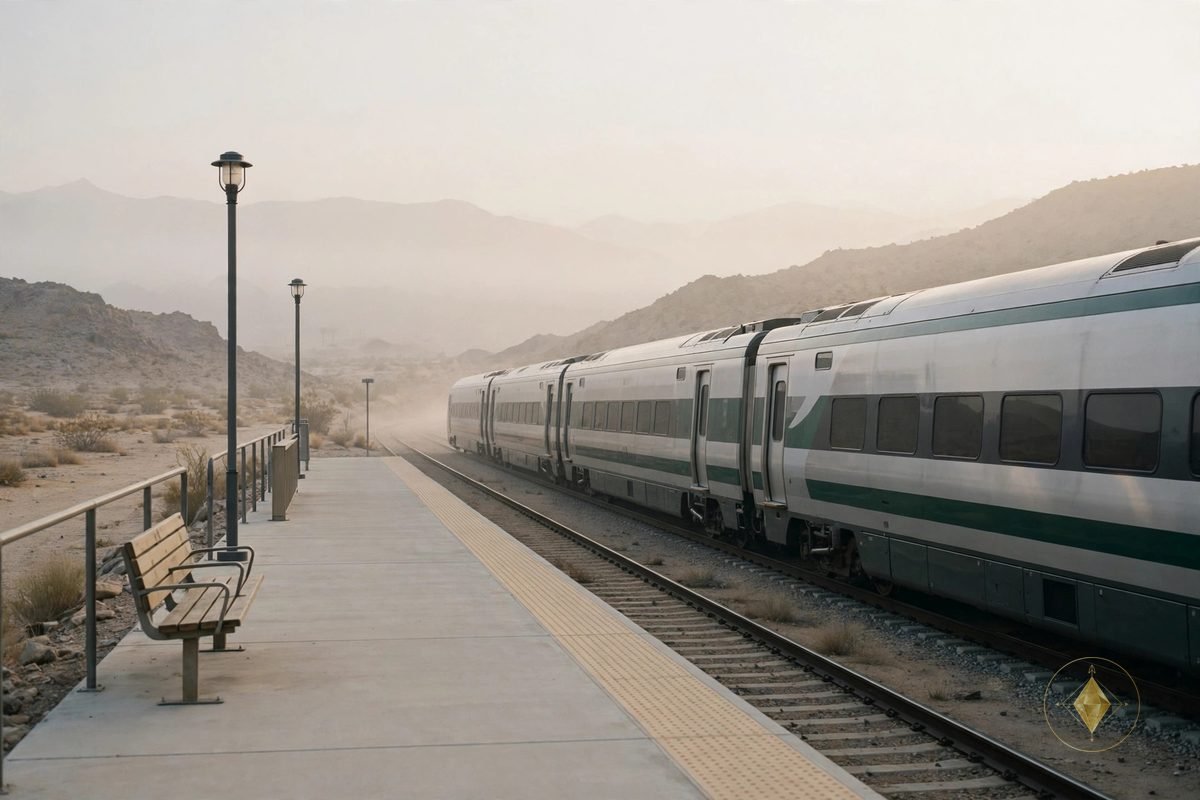
Yes. This is the first year in the country’s history with a passenger railway to price. Etihad Rail opened its first passenger service, between the capital and Fujairah, on 30 June 2026, and the capital–largest-city service followed on 30 September 2026, according to launch coverage in Khaleej Times. The fares actually sold at launch: Comfort class from AED 39 and Premium from AED 109 between the two largest cities, a journey of about 57–64 minutes station to station, with ten services a day at launch. The other live corridors price from AED 29 (largest city–Fujairah, about 70 minutes), AED 55 (capital–Fujairah) and AED 19 (Al Dhaid–Fujairah). Children aged 2–17 were launched at half the regular fare and travellers over 60 at 20% off.
Three cautions before you build a trip around it. The fares are starting fares: the operator sells Saver, Value and Flex tickets and prices move with the date and hour, so AED 39 is the floor, not the promise. The stations are not city-centre: the largest city’s station sits at Jumeirah Golf Estates and the capital’s at Mohammed Bin Zayed City, so add a bus or taxi leg at one or both ends — the train wins on the clock only if your start and finish points suit it. And the map is still growing: Sharjah’s station is not due until 30 March 2027 on the operator’s published sequence, with the Al Dhafra stations opening through December 2026. Until then, Sharjah is bus-or-car only. Book on the operator’s website or app — the trains do not take Nol.
How much does it cost to drive yourself?
Driving prices in three parts: the fuel, the tolls, and the car itself.
Fuel. Pump prices are set federally each month. For October 2026 they were Super 98 at AED 4.40 a litre, Special 95 at AED 4.28, E-Plus 91 at AED 4.21 and diesel at AED 4.80 (Gulf News’ monthly price report). The flagship run is roughly 150 km; an average car drinking 8 litres per 100 km burns about 12 litres — about AED 51 of Special 95. A cost guide working from the same October price puts petrol at about AED 0.34 per kilometre, which lands in the same place.
Tolls. Two systems, two rulebooks. Salik, in the largest city, charges AED 6 at peak (06:00–10:00 and 16:00–20:00), AED 4 off-peak and nothing between 01:00 and 06:00, with 5% VAT added since June 2026 (AED 6.30 / AED 4.20 at the gate). Darb, in the capital, charges AED 4 a crossing — only in weekday peak windows at the four original bridge gates, but around the clock at the two gates added in May 2026, including Ghantoot on the motorway near the border, which every driver on the flagship run passes. There have been no Darb daily or monthly caps since September 2025. Put together, a comparison in Khaleej Times priced the flagship drive at about AED 72–85 one way in fuel and tolls, excluding parking — consistent with the components above.
The car. If you do not own one, rental listings retrieved on 1 November 2026 (priced 29 October) put economy cars from AED 50 a day before VAT, with refundable deposits commonly around AED 1,000; airport comparison data puts the cheapest hire at AED 52 a day and the market average near AED 100. Monthly economy rentals, from roughly AED 800–1,300, beat daily rates after about two weeks. Tolls and fines are billed to the renter afterwards — budget for the Salik and Darb lines to arrive on a later statement, not at the barrier. If the car is yours rather than rented, our car ownership costs breakdown and driving licence costs guide price the rest of running it.
When is a taxi or a shared car worth the money?
A metered taxi on the flagship run is the one option whose price the sources cannot pin down — because the meter can’t either, until the trip ends. Published estimates retrieved for this page: AED 200–300 (a commuter guide), about AED 260–330 (a fare guide building it from the AED 12 flag fall plus AED 2.19 per kilometre plus tolls), AED 389–398 (a Khaleej Times estimate) and about AED 300 (a fare tracker updated 31 October 2026). Plan on AED 250–400, more from an airport (a AED 25 airport flag fall applies) and more in traffic, which the meter charges you for sitting in. Split four ways, though, a taxi at AED 300 is AED 75 a head door to door — against AED 25–39 a head plus station legs on public transport. For a group with luggage, that is a fair trade, and it is the only honest case for the taxi on this corridor.
Between the bus and the taxi sit the shared car-lift services — commercial per-seat cars on commuter corridors, priced at AED 35–50 a seat on the flagship run. They are not public transport and they are not licensed taxis; they are a commuter market that exists because the gap between a AED 25 bus and a AED 300 taxi is wide. If you use one, you are buying a seat in someone’s scheduled car, and the price above is what the largest operator’s own guide publishes.
Which journeys still have no cheap option?
Three gaps deserve plain statements. There are no domestic flights to buy — no airline sells a scheduled seat between any two emirates, whatever the search engine suggests; the distances are 45 minutes to two hours by road, and the train now covers the flagship pair in about an hour. Sharjah waits for its train until March 2027, and its bus link to the capital (AED 30) is slower than its link to its neighbour (AED 10–12) — geography, not neglect: the cheap corridor runs the other way. And the east coast is thin: Fujairah has the new train from AED 29 and a bus listed at AED 30, but the smaller towns beyond it — Kalba, Khor Fakkan’s onward villages, the Hatta exclave — are served by infrequent buses or not at all on the fares retrieved for this page, and no honest fare could be sourced for them. For those, a rental car from AED 50 a day is not the expensive option; it is the only one. Visitors planning a wider trip should also read our UAE trip cost breakdown and the visit visa costs guide before booking anything.
FAQs
What is the single cheapest intercity fare in the country?
The Sharjah bus from the largest city, at AED 10–12 depending on the route — E307-family services are listed at AED 10 and the E306 at AED 12 in the sources retrieved on 1 November 2026. The cheapest rail fare is AED 19, Al Dhaid to Fujairah in Comfort class.
Can I pay cash on an intercity bus?
On RTA services, no — Nol card only, and the card’s included AED 19 credit is not enough for a AED 25 fare, so top up first. Abu Dhabi services use the Hafilat card. The trains take neither card; book on the operator’s site or app.
Is the train faster than driving?
Station to station, yes: 57–64 minutes against 1.5–2 hours on the road. Door to door, it depends where you start — both stations sit outside their city centres, so add the access legs before deciding.
How much are the tolls on a return drive between the two largest cities?
On the components retrieved for this page: the Ghantoot Darb gate charges AED 4 each way around the clock, and Salik crossings in the largest city cost AED 4.20–6.30 each including VAT depending on the hour, with up to two gates each way on common routes. A return trip’s tolls therefore run roughly AED 16–33, inside the AED 72–85 one-way fuel-and-tolls estimate quoted in the driving section.
Why do sources give different taxi fares for the same journey?
Because a metered fare is not a fixed price: it is a flag fall (AED 12, or AED 25 from an airport) plus a per-kilometre rate plus tolls plus time spent in traffic. The estimates retrieved for this page span AED 200–398 for the flagship run; the planning range of AED 250–400 covers all of them.
Data sources used on this page:
- ExploreInDubai — Abu Dhabi Central Bus Station guide (Abu Dhabi Mobility published inter-emirate fares: capital run AED 25, Sharjah AED 30; checked October 2026) — https://exploreindubai.com/abu-dhabi/abu-dhabi-central-bus-station/ — retrieved 1 November 2026
- Zagdim — capital corridor transport comparison (RTA journey planner fares queried 19 October 2026; Khaleej Times driving and taxi estimates, 4 October 2026) — https://zagdim.com/en/dubai/dubai-to-abu-dhabi-transport-guide/ — retrieved 1 November 2026
- KayfUAE — Al Ghubaiba Bus Station guide (E100/E101 AED 25; E306/E307 AED 12) — https://kayfuae.com/al-ghubaiba-bus-station/ — retrieved 1 November 2026
- KayfUAE — Dubai to Ajman bus guide (E400 AED 15, E411 AED 12, Nol only; updated October 2026) — https://kayfuae.com/dubai-to-ajman-bus-timings-route-map-and-fares/ — retrieved 1 November 2026
- AllStations — Abu Dhabi bus stations and fares (ITC fare list: Al Ain AED 30/40, Ajman AED 35, Al Dhafra AED 30–37) — https://allstations.ae/abu-dhabi-bus-stations/ — retrieved 1 November 2026
- Khaleej Times — Etihad Rail launch feature (passenger launch dates, routes, journey times, fares from AED 39/109; published 27 October 2026) — https://www.khaleejtimes.com/business-technology-review/uae-completes-a-missing-link-in-its-transport-network-etihad-rail-ushers-in-a-new-era-of-connectivity?amp=1 — retrieved 1 November 2026
- Expat Media — Etihad Rail service launch report (stations, timetable, fares; September 2026) — https://www.expatmedia.net/etihad-rail-dubai-abu-dhabi/2026/09/ — retrieved 1 November 2026
- CarsClub — Salik charges 2026 rate card (variable tariff, 5% VAT from June 2026) — https://carsclub.ae/news/salik-charges-uae-2026-cost — retrieved 1 November 2026
- Gulf News — transport update, 1 November 2026 (Salik Dh6/Dh4 plus VAT; federal fuel context) — https://gulfnews.com/uae/transport/uae-weekend-traffic-road-closures-parking-updates-salik-rates-metro-timings-and-new-speed-limits-1.500730222 — retrieved 1 November 2026
- OneClickDrive — renting a car in Abu Dhabi vs Dubai (Darb gates, peak windows, Ghantoot and Al Qurm 24-hour gates; July 2026) — https://blog.oneclickdrive.com/renting-a-car-in-abu-dhabi-vs-dubai/ — retrieved 1 November 2026
- Brook Drive — car rental prices guide (October 2026 federal fuel prices via Gulf News; toll summaries) — https://brook-drive.rent/car-rental-prices-in-dubai/ — retrieved 1 November 2026
- CarLiftDubaiToAbuDhabiAE — carpool cost split guide (October 2026 Special 95 at AED 4.28/litre; AED 0.34/km) — https://carliftdubaitoabudhabiae.com/blog/how-to-split-carpool-costs-uae/ — retrieved 1 November 2026
- DubaiToAbuDhabiCarLift — commuter guide (metered taxi AED 200–300; shared car-lift seats AED 35–50) — https://dubaitoabudhabicarlift.com/what-is-the-best-mode-of-local-transport-in-dubai/ — retrieved 1 November 2026
- Arabian Auto Rental — capital corridor taxi fare guide (flag fall, per-kilometre rate, meter estimates) — https://arabianautorental.com/dubai-to-abu-dhabi-taxi-fare-2025-exact-costs-for-cabs-uber-careem/ — retrieved 1 November 2026
- Rental Cars UAE — economy rental listings (from AED 50/day; rates verified 29 October 2026, before VAT) — https://rentalcarsuae.com/rent-a-car-dubai-uae-2/ — retrieved 1 November 2026
- Cheapflights — car hire at the largest gateway’s airport (cheapest AED 52/day, average about AED 100/day; data updated 30 October 2026) — https://www.ae.cheapflights.com/car-rentals/Dubai-DXB/ — retrieved 1 November 2026
- Pitstop Arabia — public transport in the UAE guide (RAKTA bus AED 27; intercity overview) — https://www.pitstoparabia.com/en/news/public-transport-uae-guide — retrieved 1 November 2026
Pingback: UAE Visit Visa Costs in 2026: Fees, Types and How to Apply - SalarySouq
Pingback: DXB, AUH or SHJ: Which UAE Airport Should You Fly Into?
Pingback: UAE Day Trip Costs 2026: DIY vs Organised Tour Prices